
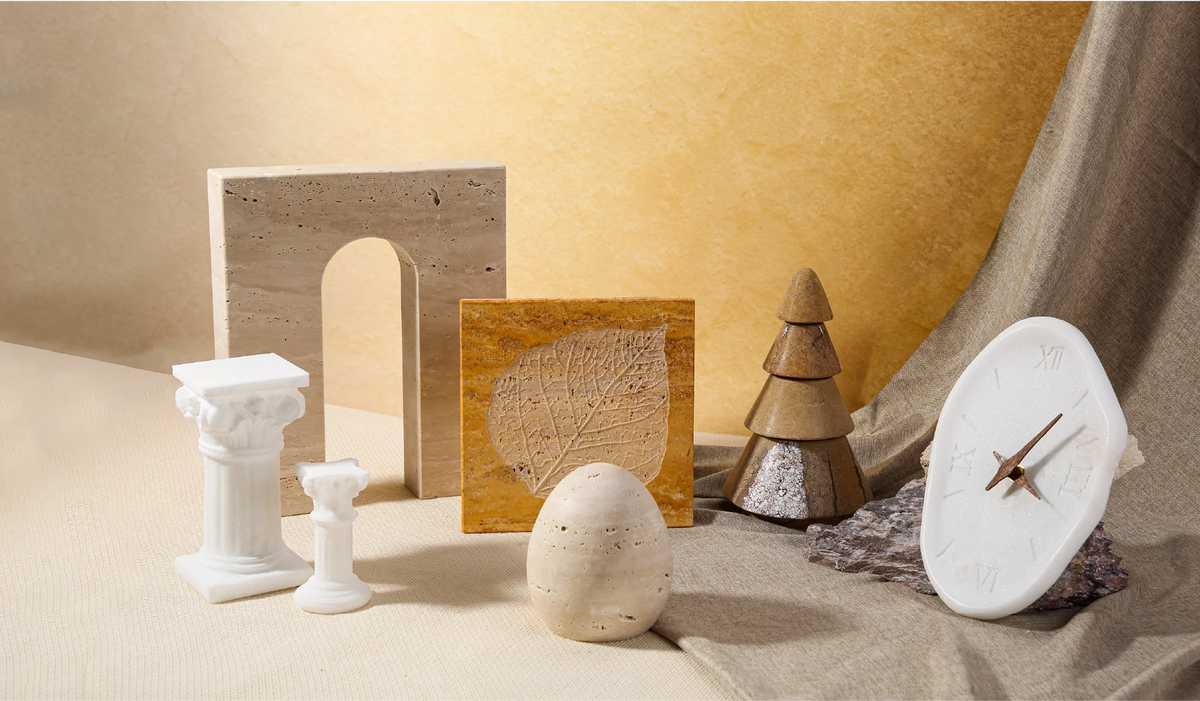
If you're new to natural stone, it can feel intimidating. The pieces look expensive. The care rules sound complicated. The online listings all claim to be "premium." How do you actually tell what you're getting, and what should you buy first?
This guide answers all of it in one place. Read it once before you buy, and you'll save yourself the trial-and-error most people go through.
What "natural stone" actually means
Natural stone is exactly what it sounds like — marble, granite, travertine, onyx, and other stones that are quarried from the earth and cut into shapes. Each piece is literally one of a kind because the veining and color come from millions of years of geology, not a factory process.
For home decor, you'll most often see:
- Marble. Soft veins, light base. The classic "elegant stone" look.
- Granite. Tighter pattern, harder, more scratch-resistant.
- Travertine. Warm, earthy tones with a slightly pitted surface.
- Onyx. Translucent, often brightly colored. Used for statement pieces and lamps.
- Quartzite. Often confused with marble but harder and more durable.
Most of what you'll find in everyday home decor is marble, because it's the most versatile in look and feel.
What to look for when you buy
Five things separate a piece you'll keep for decades from one you'll regret.
- The finish. A polished surface should be smooth and even. Run a cloth across it — you shouldn't feel rough spots or pits.
- The edges. Hand-finished pieces have slightly soft, irregular edges (this is normal and honest). Machine-finished ones have crisp 90-degree edges. Both are fine — just know which you're getting.
- The base. A flat, stable base is more important than perfect looks. A wobbly tray or coaster will annoy you forever.
- The weight. Real stone has real weight. If a piece feels suspiciously light, it may be resin or composite.
- The honesty of the seller. Look for clear photos of the actual stone (not stock images), honest notes about size variation, and care instructions that don't oversell the material. If a listing claims marble is "indestructible" or "stain-proof," walk away. Real stone has real care rules, and good sellers tell you what they are.
The two myths to ignore
"Marble stains easily." Marble is porous, but a sealed piece, wiped within a few minutes of a spill, doesn't stain. The horror stories come from spills left overnight. Wipe, and you're fine.
"Marble is fragile." Marble has been used for buildings, sculptures, and countertops for thousands of years. A marble tray isn't fragile — it just doesn't tolerate being dropped on tile or soaked in the dishwasher. Treat it like a real tool, not a display piece, and it will last longer than you.
What to buy first (the smart order)
If you're just starting out, here's the order we'd recommend:
- Coasters. Low cost, low risk, high use. You learn the material's care in the easiest possible context. A great starter.
- A small tray. The workhorse of natural stone in a home — entryway catch-all, kitchen counter organizer, bedside companion. A piece you'll use every day.
- A soap dish or small bowl. A natural next step. Adds another surface to the home and a different shape to enjoy.
- A lamp or larger statement piece. Once you've lived with stone for a few months, you'll know exactly what kind of piece would feel right in your space. Then go big.
How to care for it (the 2-minute routine)
You don't need a 10-step ritual. You need three habits.
- Wipe with a soft damp cloth after use.
- Dry immediately. Don't let water sit.
- Avoid acids (vinegar, lemon, harsh sprays) and abrasives (steel wool, scouring powder).
That's the whole routine. Five minutes a week. For the full breakdown, see our How to Clean a Marble Tray and our guide on removing stains the honest way.
How to spot a piece worth the price
A "good" piece of natural stone decor isn't about the brand. It's about:
- Real weight and feel. Pick it up. Does it feel solid?
- Clear, true photos. Avoid listings that use the same image for every stone color.
- Honest copy. Look for disclaimers about hand-finished variation, natural veining, and care needs. If a seller says nothing about care, they don't know the material.
-
Reasonable price. Real stone isn't cheap, but it doesn't need to be luxury-priced either. A small marble coaster in the
15–25 range is reasonable; a $5 marble coaster is probably resin.
- A real story. Where is the stone from? Who made it? Brands that can tell you are usually brands that care.
A few things that surprised our first-time buyers
- Every piece is different. If you order two trays in the same color, they'll have different veining. This is the point, not a defect.
- The size is approximate. Hand-finished pieces vary by a few millimeters. Good sellers tell you this in advance.
- It looks better with age. Marble develops a soft patina. A piece that's been used for a year looks better than the day it arrived.
-
You won't want to go back. Once your home has real stone in it, the alternatives feel cheap.
Ready to start?
If you only buy one thing, start with a coaster or small tray. Live with it for a month. Then you'll know what you want next.
For care, start with our how to clean a marble tray guide It's everything you need for the first year of ownership.
Share:
How to Clean a Marble Tray (Without Ruining It): A 5-Minute Guide
Are Marble Coasters Actually Functional? Care, Sealing & What to Avoid