
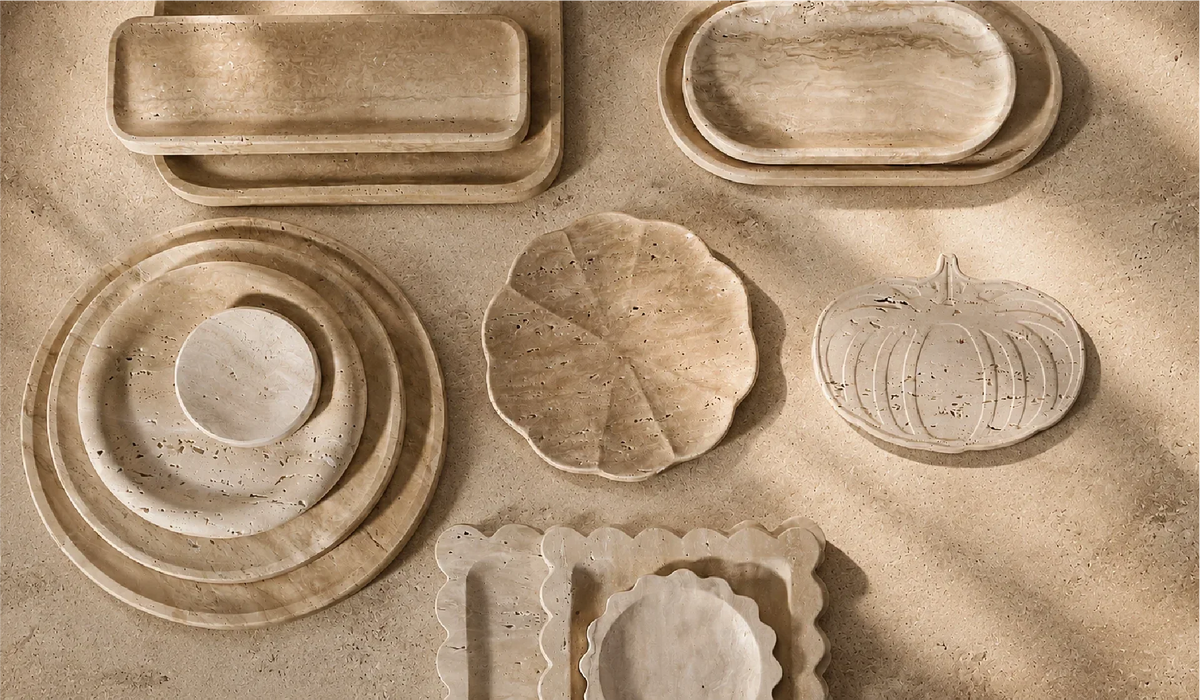
Natural stone is more durable than it looks — but it's also more honest than most materials. A marble tray will show you exactly how you treat it. The good news: with the right routine, it stays beautiful for decades, not years.
Here's the quick answer up front, then the full guide below.
The short version: wipe with a soft damp cloth after each use, use a pH-neutral cleaner (or a drop of mild dish soap), dry it with a microfiber cloth, and never use anything acidic like vinegar, lemon, or harsh sprays.
What you need
- A soft, lint-free cloth (microfiber is ideal)
- Lukewarm water
- A pH-neutral cleaner, or a tiny drop of mild dish soap
- A separate dry microfiber cloth
That's it. No specialty products required for everyday care.
Step-by-step (takes about 5 minutes)
- Wipe loose debris first. Use a dry cloth to brush away crumbs or dust so you're not dragging grit across the surface.
- Dampen, don't soak. Wet a cloth with lukewarm water, wring it out well, and wipe the surface in a gentle circular motion.
- Add soap only when needed. If the tray feels greasy, add a single drop of mild dish soap to the water. Less is more — leftover soap film dulls the shine.
- Dry immediately. This is the step most people skip. Go over the whole tray with a dry microfiber cloth right away. Standing water is marble's biggest enemy.
- Buff lightly. A quick final buff brings the natural polish back without any product.
What to avoid (the things that actually damage marble)
- Acids. Vinegar, lemon juice, wine, and many "all-purpose" sprays etch the surface — they leave dull, cloudy spots you can't wipe off.
- Abrasive pads or powders. Steel wool and scouring powder leave micro-scratches that flatten the shine over time.
- Soaking or the dishwasher. Marble is porous. Long water contact and dishwasher heat are the fastest way to dull and weaken it.
A note on stains
Natural stone can stain if a spill sits. The honest rule: wipe spills quickly, and you'll almost never have a problem. For oily marks, a paste of baking soda and water left for a few minutes usually lifts it. For anything stubborn, a dedicated stone-safe cleaner is worth the small investment.
Why a little care is worth it
Marble is one of the few materials that gets better with character — a small etch here, a lived-in softness there. It doesn't need to look untouched to look beautiful. It just needs a routine that takes five minutes and respects what it's made of.
Browse our natural stone trays to find the one that fits your space, or start with our first-time buyer's guide to natural stone home decor to learn what to look for before you buy.
FAQ
Can you put a marble tray in the dishwasher?
No. Marble is porous, and dishwasher heat and detergents will dull and weaken the surface over time. Hand wash with a damp cloth and dry immediately instead.
What is the best cleaner for a marble tray?
A pH-neutral cleaner, or a single drop of mild dish soap in lukewarm water. Avoid anything acidic like vinegar or lemon, which will etch the surface.
How do you remove a stain from a marble tray?
Wipe spills quickly to prevent most stains. For oily marks, a paste of baking soda and water left for a few minutes usually lifts it. For stubborn stains, use a dedicated stone-safe cleaner.
Will cleaning a marble tray scratch it?
Not if you use a soft cloth. Avoid steel wool, scouring powder, and abrasive pads — those leave micro-scratches that dull the shine over time.
How often should I clean my marble tray?
A quick wipe after each use is enough. A deeper clean with a drop of soap is only needed when the surface feels greasy. Five minutes a week keeps it looking new.
Share:
The Complete First-Time Buyer's Guide to Natural Stone Home Decor