
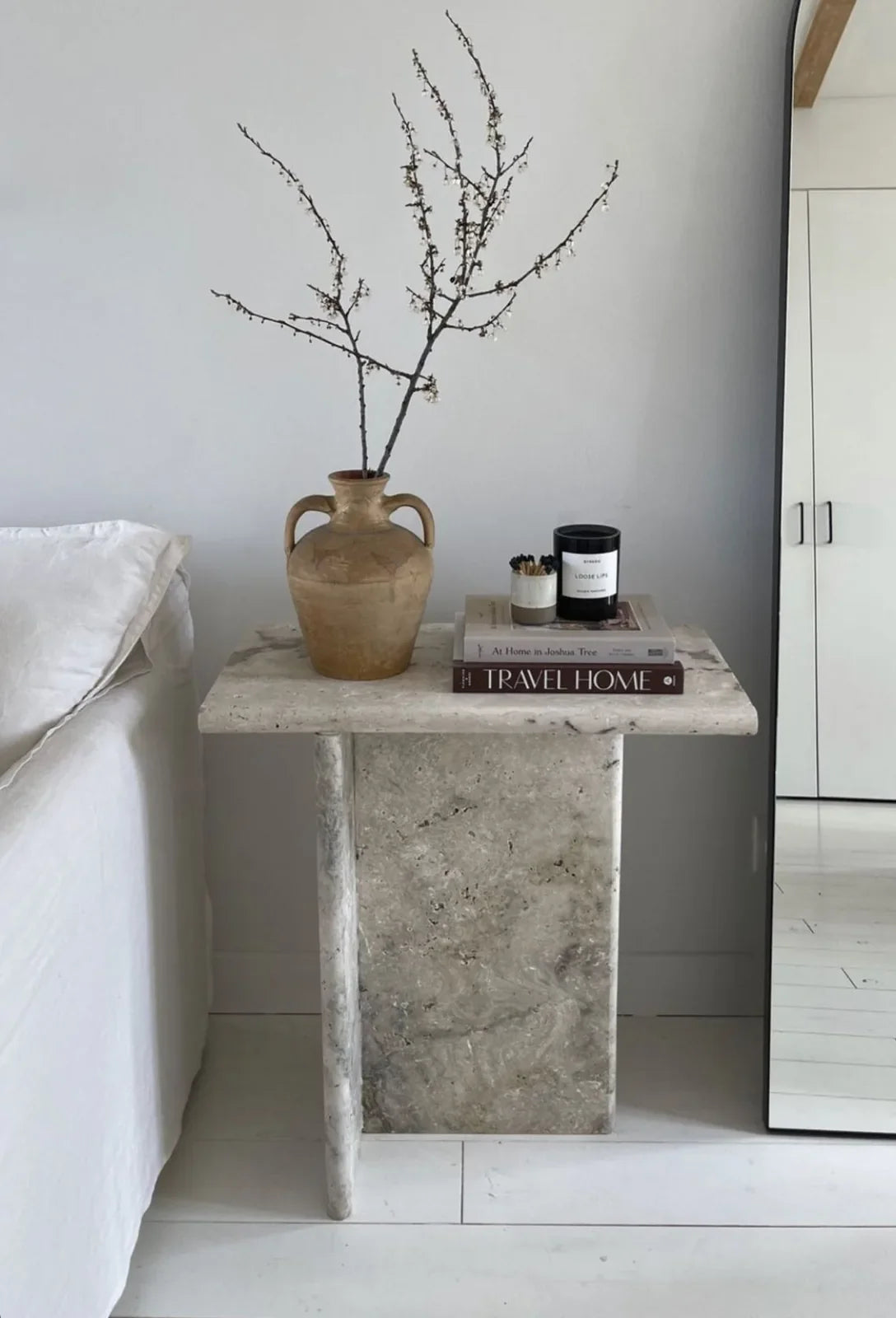
Japandi and minimalist interiors often feel calm because each object has a clear role. The room is not empty; it is edited. Natural stone fits this approach well because its surface can add depth without introducing a busy pattern or a large number of decorative items.
Start with one useful stone accent
Instead of adding several stone pieces at once, choose one object that supports a daily routine. A tray can gather small items on a coffee table or entry surface. A bowl or decorative object can give a shelf a grounded focal point. Confirm the intended use in the product information before choosing a location, especially near water, heat, or frequently used surfaces.
A single piece is often enough. Natural stone already carries veining, tonal shifts, and texture, so it does not need much visual competition. Leave open space around it and avoid treating it as a base for too many small accessories.
Build around quiet materials
Japandi brings together the warmth of Japanese-influenced simplicity and Scandinavian practicality. In practice, that often means pale or medium wood, linen, cotton, paper, matte ceramics, and soft neutral colors. Stone can act as a cooler counterpoint to these materials.
Try placing a light or dark stone accent on wood rather than matching every surface exactly. The contrast helps each material read clearly. A folded linen napkin, a simple ceramic cup, or a small branch can soften the arrangement without turning it into a display of unrelated textures.
If space is tight, see5 ways to style marble in a small apartment.
Let variation be part of the composition
Natural stone is not uniform. A tray may show different veining, color balance, or movement from the image or another piece. In a minimalist room, that variation can become the detail that keeps the space from feeling flat.
Choose the piece for its overall mood rather than for an expectation of an identical pattern. Place it where natural or gentle ambient light can reveal the surface, but do not make promises about how it will look under every lighting condition. If you are comparing materials before buying,Natural Stone Home Decor Buyer’s Guideoffers useful general considerations.
To see how it is made, readhow a marble tray is made.
Keep the palette restrained
A Japandi or minimalist palette does not have to be entirely beige or white. It simply benefits from a small number of related tones. Use the stone’s color as an anchor, then repeat one supporting shade elsewhere in the room. For example, a darker stone accent may sit comfortably with charcoal textiles, warm wood, and off-white walls. A lighter stone may work with sand, cream, and muted gray.
Avoid adding several strong patterns around the stone. If the surface has expressive veining, let that be the visual movement in the arrangement.
Style for real routines
The most successful minimalist styling is easy to maintain. Place only the objects you use or genuinely enjoy seeing. At an entryway, a stone tray may help contain keys and small daily items. On a dining table, it may define a simple centerpiece when the table is not in use. On a shelf, it may hold one or two objects rather than a crowded collection.
Follow the care guidance for the specific item, wipe spills promptly, and avoid assuming that natural stone is maintenance-free. For general tray-cleaning guidance, seeHow to Clean a Marble Tray.
Natural stone works best in a restrained home when it is allowed to be itself: useful, varied, and quietly present. One thoughtful placement can bring weight and texture to a room while preserving the calm that Japandi and minimalist spaces are designed to create.
Q: How many natural stone pieces should I use in a minimalist room?
A: Begin with one useful accent and leave space around it. Add another only if the room still feels clear and balanced.
Q: Does natural stone work with warm wood?
A: Yes. Stone can provide a calm contrast to wood, linen, and matte ceramics. Keep the surrounding palette simple so each material remains visible.
Q: Can I use a stone accessory in any room?
A: Use it only where the product information supports that purpose. Check the care guidance before placing it near water, heat, or heavily used surfaces.
Japandi essential: minimalist marble tray — quiet luxury for calm interiors.
Share:
5 Ways to Style Marble in a Small Apartment
Namib Bianco Marble: The White Marble That Holds Up at Home