
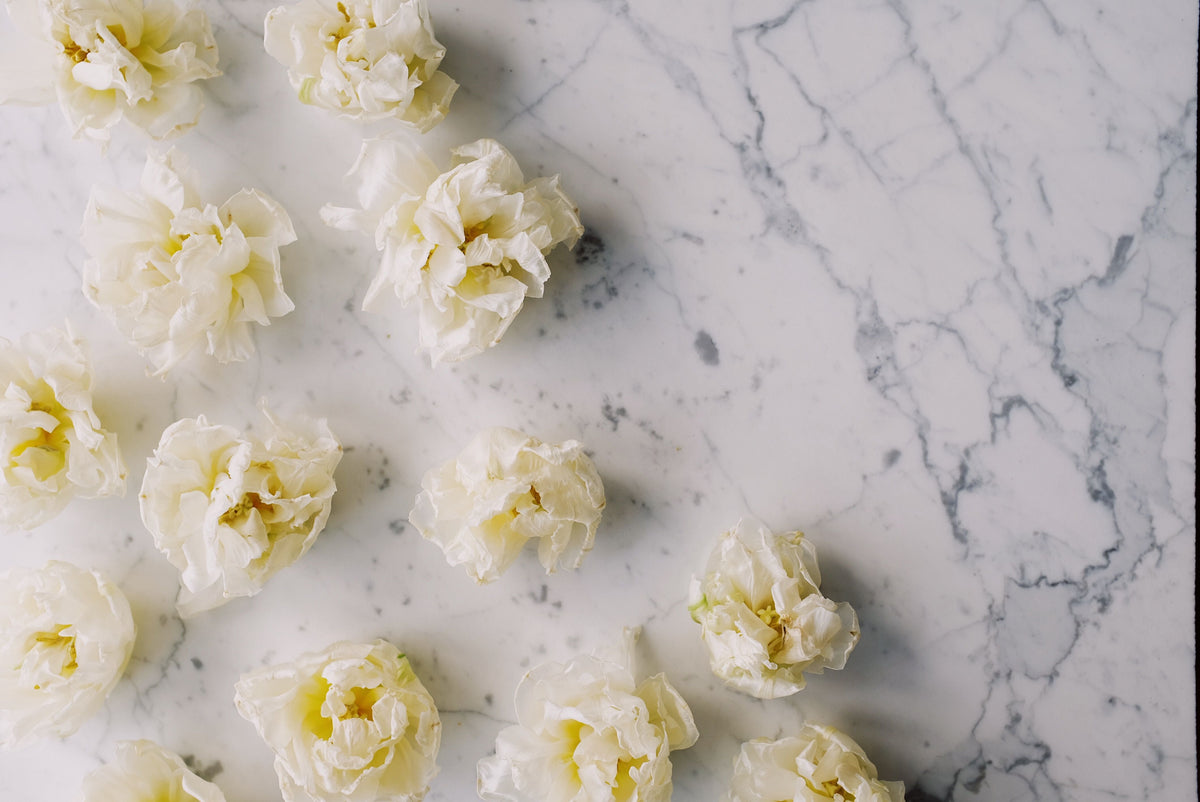
Calacatta, Arabescato, and Carrara: Start With the Pattern
When people compare Calacatta, Arabescato, and Carrara marble, they are usually looking at three familiar names for light-colored marble with different visual expressions. The names can help organize a selection, but they should not replace the actual sample in front of you. Natural stone varies from piece to piece, and a supplier’s naming or grading system may also affect how a material is described.
Calacatta: A Bold, High-Contrast Look
Calacatta is often selected when the goal is a light background with noticeable veins. The pattern may read as broad, dramatic, or strongly directional. In a small decor item, this can create a clear focal point. Look at how much of the surface is occupied by the vein and whether the direction works with the shape of the piece.
Arabescato: Movement With More Complexity
Arabescato is commonly associated with a more animated pattern, often with branching or flowing movement across the surface. The visual effect can feel decorative and layered. If you prefer a stone that draws the eye, compare several samples and consider whether the pattern feels balanced at the scale of your intended item.
If you are still narrowing down the material, seemarble vs granite comparison.
Carrara: A Softer, More Versatile Impression
Carrara is often chosen for a quieter light-marble appearance. Its veining may look finer or more diffuse, creating a versatile backdrop for both modern and traditional interiors. A softer pattern can be useful when the surrounding room already includes strong grain, color, or ornament.
Think About Scale and Context
A sample viewed in a showroom or on a screen may not behave the same way as a finished object in your home. On a compact tray, coaster, or small accent, one vein can occupy a large share of the visible surface. On a longer or wider piece, the same pattern may feel more stretched and directional. Consider the viewing distance, the objects that will sit on the stone, and whether the piece will be seen from several angles.
It is also useful to compare the stone with your existing palette before making a decision. Place a sample near your cabinetry, wall color, hardware, or textiles if possible. A marble that appears cool in isolation may feel balanced beside warm materials, while a busy vein may become more noticeable against a quiet background. This simple check can be more useful than relying on a category name alone.
Spills and marks do happen — seehow to remove stains from natural stonefor the safe approach.
How to Make a Practical Comparison
Start with the background tone. Light marble is not one single white: it may appear warmer, cooler, brighter, or more muted depending on the stone and the light around it. Next, study vein scale and direction. A large vein can become the main design feature, while a fine pattern may support other objects.
Then review the edges and finish. The same stone can feel very different with a polished, honed, or otherwise specified surface. Also check the dimensions and construction details. Hand-finished or naturally variable pieces may have slight differences in size, edge character, and pattern placement.
There is no universally best choice. The right marble depends on the mood you want, the scale of the item, and how much visual movement your room can accommodate. For more selection guidance, see ourNatural Stone Home Decor Buyer’s Guide. If you want a white marble that holds up well at home, see our guide to Namib Bianco marble.
Is Calacatta always more dramatic than Carrara?
Not necessarily. Stone appearance varies by selection, and names can be used differently across suppliers. Compare the actual sample, not only the label.
Which marble is easiest to style?
A quieter Carrara-like pattern may blend easily, while a stronger Calacatta- or Arabescato-like pattern can act as a focal point. The best choice depends on the rest of the room.
Will two pieces of the same marble look identical?
No. Natural veining, tone, and pattern placement vary. Small differences are part of the material’s character.
Shop the look: Bianco Carrara marble tray — classic white marble with soft grey veining.
Share:
What Is Nero Marquina Marble? A Guide to Its Look and Use