


Travertine is the warmest stone we sell — honeyed, soft to the eye, and no two pieces alike. And yes, the holes are completely normal: they are how the stone formed, not a flaw, and not a reason to send a piece back.
This guide covers what travertine is, why it looks the way it does, where it works at home, and the short care routine that keeps it looking good — including the one thing sealing cannot do.

In This Guide
- 1. What Travertine Actually Is
- 2. The Holes Are the Point, Not a Defect
- 3. Why It Feels Warm
- 4. Where It Works at Home — and Where It Doesn't
- 5. The Honest Care Routine
- 6. What Our Customers Ask Most
- 7. Frequently Asked Questions
- 8. The Bottom Line
1. What Travertine Actually Is
Travertine is limestone that formed on land, at mineral springs — not marble, and not a flaw in the stone family.
Travertine is the terrestrial type of limestone: calcium carbonate deposited on land, around hot springs, rather than under the sea. That is the Natural Stone Institute's definition, and it explains almost everything about how the stone behaves. Like marble and limestone, travertine belongs to the calcareous family — stones built mainly on calcium carbonate — which is why it shares their care logic: it is sensitive to acid, and it benefits from sealing.
It is not marble. Marble is limestone that was recrystallised under heat and pressure; travertine is sedimentary, laid down layer by layer at the surface. The confusion is understandable — both are calcium carbonate, both take a polish — but they formed differently, and the holes are the visible proof.
Travertine is also a soft stone. Its main mineral is calcite, which sits at 3 on the Mohs hardness scale — the mineral anchor, not a marketing number. That softness is why it feels warm rather than glassy under the hand, and why it scratches more easily than granite. For a full portrait of a harder-working white stone, see our Namib Bianco marble guide.
2. The Holes Are the Point, Not a Defect
The holes are trapped gas from the stone's formation — a defining characteristic, not a lower grade.
As calcium-rich water deposits travertine, carbon dioxide escapes and bubbles and bits of organic matter get sealed inside the stone by later layers of calcium carbonate. The result is a surface pitted with small holes and crossed with bands. When a piece is made, the surface holes are filled with cement or resin so the piece feels smooth — but voids inside the stone cannot be reached. Occasionally a thin shell over a hidden void opens up in use, and a new small hole appears. That is the nature of real travertine, not a defect and not a sign that the piece was second-rate.

Whether the holes are filled is a finishing choice, not a quality judgement. Filled travertine is smooth and easy to wipe, which suits trays, coasters, and anything that holds a cup. Unfilled travertine keeps the open, rustic texture — better suited to a wall piece or a decorative object you do not wipe daily. Neither is the "real" version; the stone is the same either way.
A new hole that opens later can usually be left alone on a small decor piece — it is the same stone showing its structure. On a tray that holds drinks, a dab of stone filler from a stone supplier closes it. If holes keep opening in the same spot, that points to a deeper void underneath, and the piece is better retired from wet use.
3. Why It Feels Warm
Warm colour, matte texture, and visible layering — travertine reads as calm where marble reads as formal.
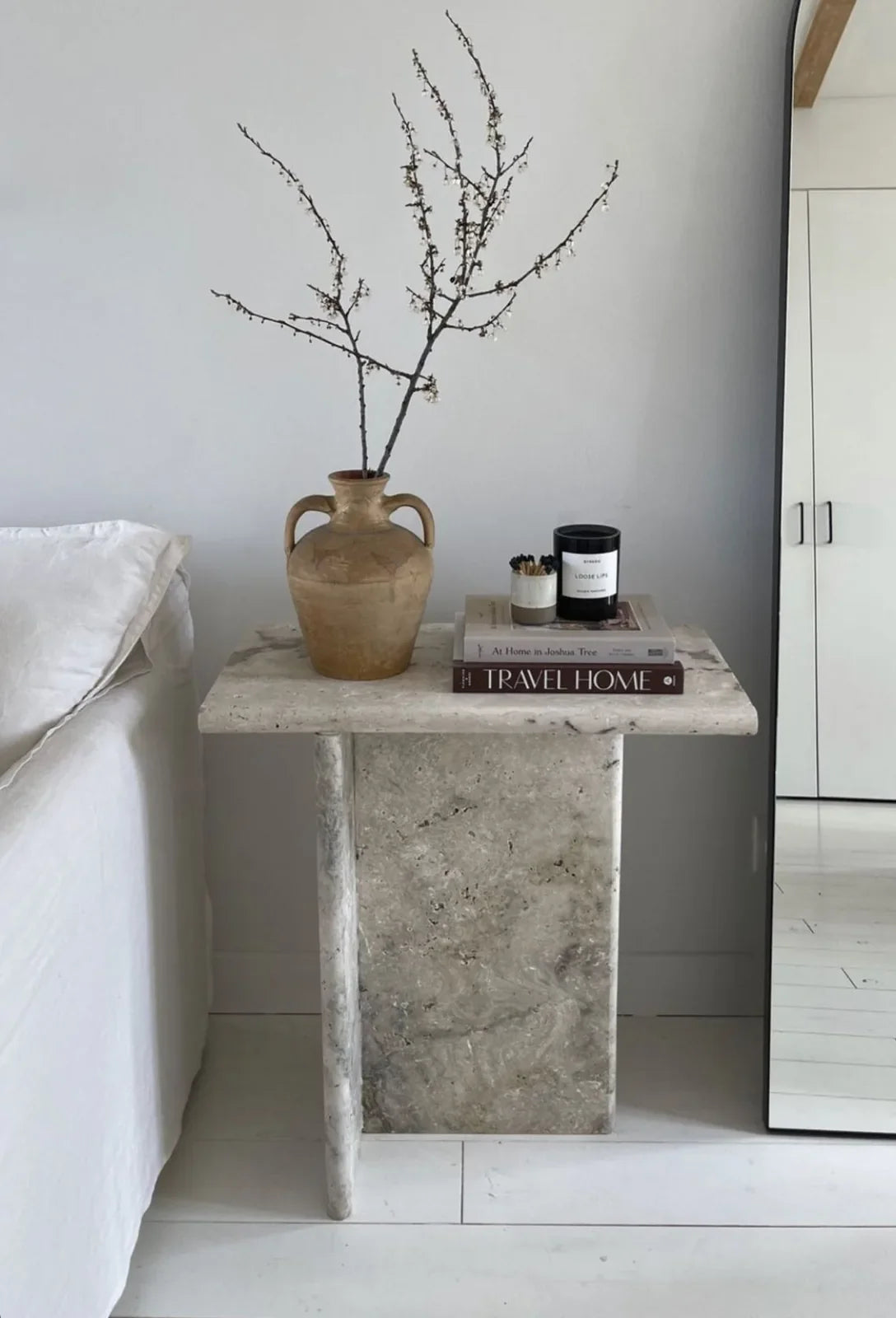
Most travertine sits in the warm neutrals: honey, cream, beige, walnut brown, and a dusty red. The colour comes from iron and other minerals in the spring water, laid down in bands, so a single piece can move from pale cream to amber across a few inches. No two pieces match, and that variation is the point — a travertine tray does not look manufactured.
The finish changes the mood more than the colour does:
| Finish | Look | Best for small pieces |
|---|---|---|
| Honed | Matte, soft, no shine | Trays, coasters — hides scratches best |
| Tumbled | Rustic, worn edges, open holes | Decorative pieces, bookends |
| Polished | Smooth, light shine | Vases, lamps — shows scratches and etches most |
Colour varies by quarry as well as by finish. Our golden travertine incense burner is the same stone as the beige pieces, just a warmer, more amber cut — the holes and banding are identical, only the tone changes.

4. Where It Works at Home — and Where It Doesn't
Travertine shines as small decor — trays, incense holders, vases, lamps — and struggles where acid lands on it daily.
Most travertine guides are written for tile floors. At home, the stone earns its keep in smaller pieces: a tray that gathers perfume bottles, an incense holder on a desk, a vase on a shelf, a lamp that throws warm light through a stone shade. Small pieces get the warmth and texture without the maintenance burden of a floor.
| Use | Verdict |
|---|---|
| Trays, coasters, incense holders | Yes — the natural home for travertine |
| Vases and lamps | Yes — dry use, wipe with a dry cloth |
| Bathroom shelf or vanity | Yes, if filled, honed, and sealed — and cleaned with pH-neutral products only |
| Kitchen worktop | Risky — lemon, tomato, and vinegar land on it daily, and every one etches |
| Outdoors | Only with care — filled travertine can fail in freeze–thaw; unfilled copes better in cold climates |
Our golden travertine racetrack tray is the everyday example: filled, honed, and sized for a vanity or a coffee table. For a taller piece, the bamboo vase in light beige travertine shows the same stone in a vertical form — the holes run down the whole body, and that is exactly what makes it read as stone rather than ceramic.


5. The Honest Care Routine
Mild soap, warm water, wipe spills promptly — and reseal when water stops beading, not on a calendar.
Travertine is thirsty stone. Absorption in the limestone family varies enormously — from under 1% to over 10% by weight, depending on the stone — which is why travertine needs the sealing conversation that granite mostly skips. Sealing matters, but it is worth knowing exactly what a sealer does: what the industry calls a "sealer" is really an impregnator. It makes the stone stain-resistant, not stain-proof, so spills still need wiping up.
The routine itself is short. Clean with a pH-neutral stone cleaner, a stone soap, or mild liquid dish detergent and warm water. Wipe up spills when they happen, especially anything acidic. Never use vinegar, lemon, or bleach-based cleaners on travertine — acid left sitting on a calcareous stone dulls the finish and leaves etch marks, and no cleaner removes an etch. An etch is a chemical change in the surface, not a stain; it needs polishing, not scrubbing. The difference is explained in full in our marble etching vs staining guide.
Good to know: Sealer slows staining but does not prevent etching. A sealed tray will still mark if lemon juice sits on it — sealing buys you time to wipe, not permission to leave acid there.
How often to reseal? There is no honest fixed number. Four care guides we checked give four different answers — from six months to five years — for the same stone. The test that actually works is the water test: sprinkle a few drops on the surface. If they bead, the seal is holding. If they darken the stone within minutes, it is time to reseal. Use and finish change the answer, so trust the test, not the calendar. The same routine applies to our granite pieces — see the granite pastry-board care guide.

6. What Our Customers Ask Most
The question we hear most about travertine is the holes — and the stone that sells best is Roman travertine.
When customers ask about the holes, this is how we explain it: the holes are part of the stone, not damage. Calcium-rich water laid the stone down fast, carbon dioxide escaped as bubbles, and bubbles and bits of organic matter were sealed inside by later layers of calcium carbonate. What you see on the surface is the stone's formation, frozen in place. A piece with visible holes is not a second-grade piece — it is a legible one.
The travertine that sells best in our store is Roman travertine — Travertino Romano, the warm beige stone in the photos above. One honest note: most Roman travertine singles are sold out right now. Trays, incense burners, and bookends in Roman travertine went first, which tells its own story about demand. The Roman pieces still in stock are the stick incense holder and the round phone holder — both linked below. If you want a Roman tray specifically, it is worth asking us before ordering, rather than assuming the listing will be restocked on a date.
7. Frequently Asked Questions
Short answers to the five questions we hear most about travertine at home.
Are the holes in travertine normal?
Yes. The holes are trapped gas from the stone's formation, and they are the defining characteristic of travertine. Filled pieces have the surface holes closed with cement or resin; unfilled pieces keep them open. Neither is defective.
Should I fill the holes or leave them open?
For pieces that hold cups or food, filled is easier to live with — smooth and simple to wipe. For decorative pieces, unfilled keeps the rustic texture. A new small hole that opens later can be left alone or closed with stone filler; it does not mean the piece is failing.
How often should I seal travertine?
There is no fixed interval worth trusting — published advice ranges from 6 months to 5 years for the same stone. Use the water test: if drops darken the stone within minutes instead of beading, reseal. How often depends on use, finish, and the sealer itself.
Can I clean travertine with vinegar or lemon?
No. Vinegar, citrus, and most bathroom sprays are acidic, and acid etches calcareous stone — it dulls the finish in a way cleaning cannot undo. Use a pH-neutral stone cleaner or mild dish soap with warm water.
Is travertine the same as marble?
No. Travertine is a sedimentary limestone formed at mineral springs; marble is limestone recrystallised by heat and pressure. Both are calcium carbonate and both etch, but travertine is more porous and softer, and its holes are the giveaway.
Start with the pieces that show the stone best. Our Roman travertine stick incense holder is the clearest look at the holes up close; the golden travertine racetrack tray is the everyday tray; and the light beige travertine bamboo vase shows the stone standing tall. Each piece has its own holes and banding, so no two are alike. Browse the full tray range in the Stone Trays collection.
Shop Stone Trays8. The Bottom Line
Buy travertine for the warmth and the holes — and keep acid away from it.
Travertine asks for one adjustment in how you look at stone: the holes are not something to overlook, they are the reason to choose it. Buy it for the warmth, the banding, and the fact that no two pieces match — and keep lemon and vinegar away from it. If you want the same calm in a whiter stone, our Namib Bianco marble guide is the next read.


Share:
Namib Bianco Marble: The White Marble That Holds Up at Home
Onyx: The Stone That Glows