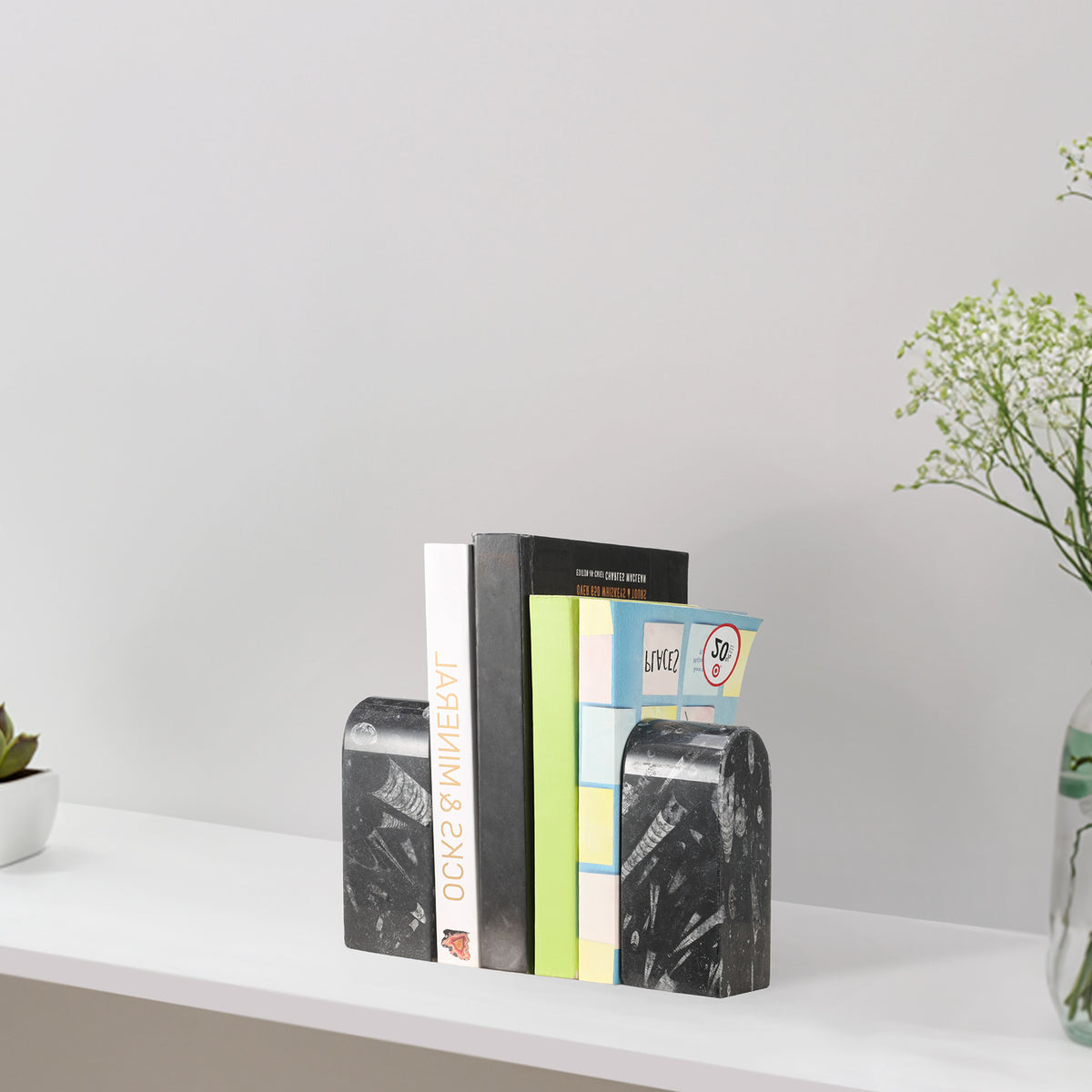
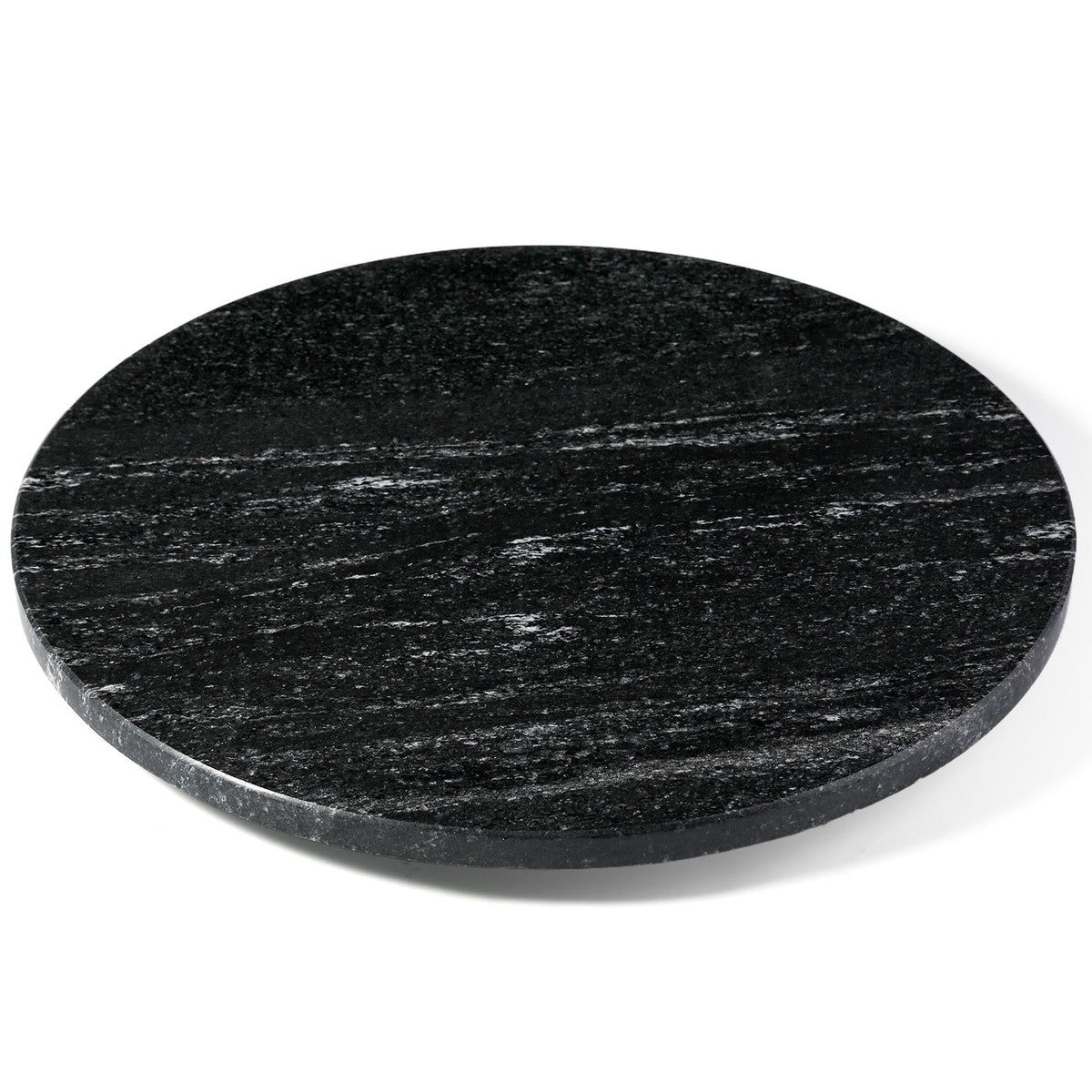
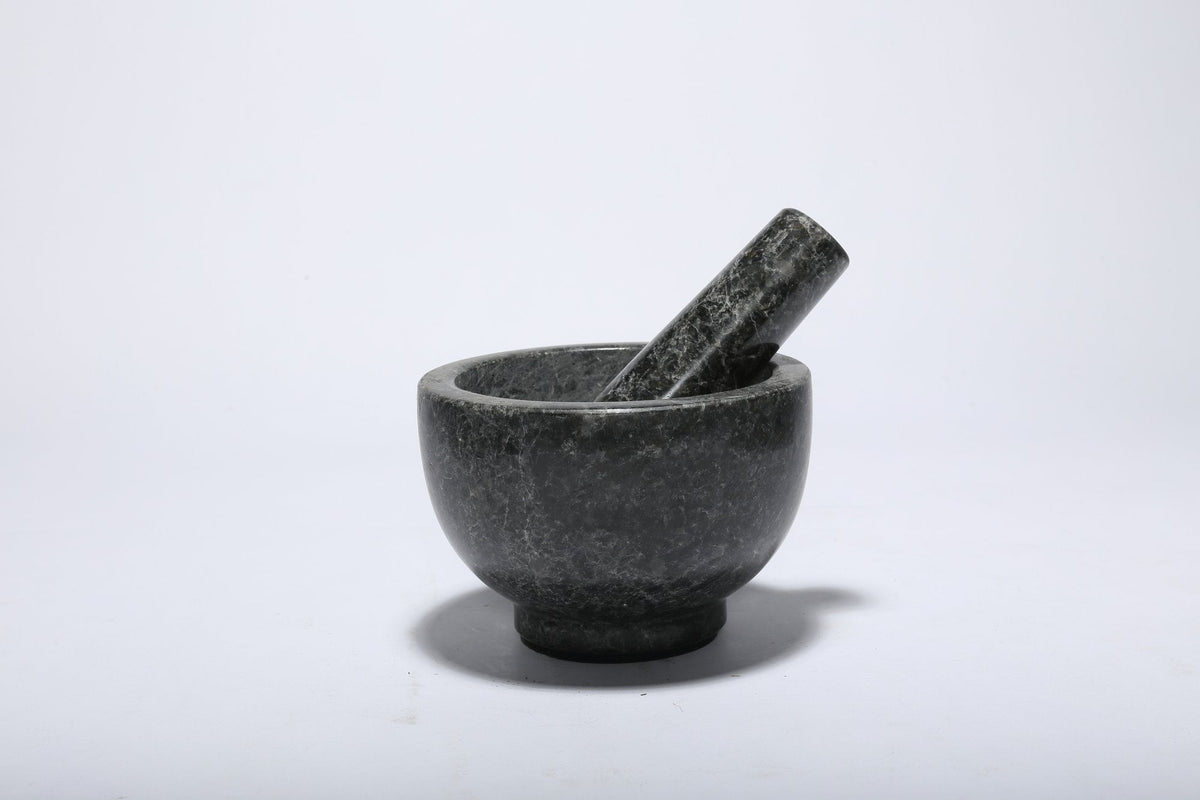
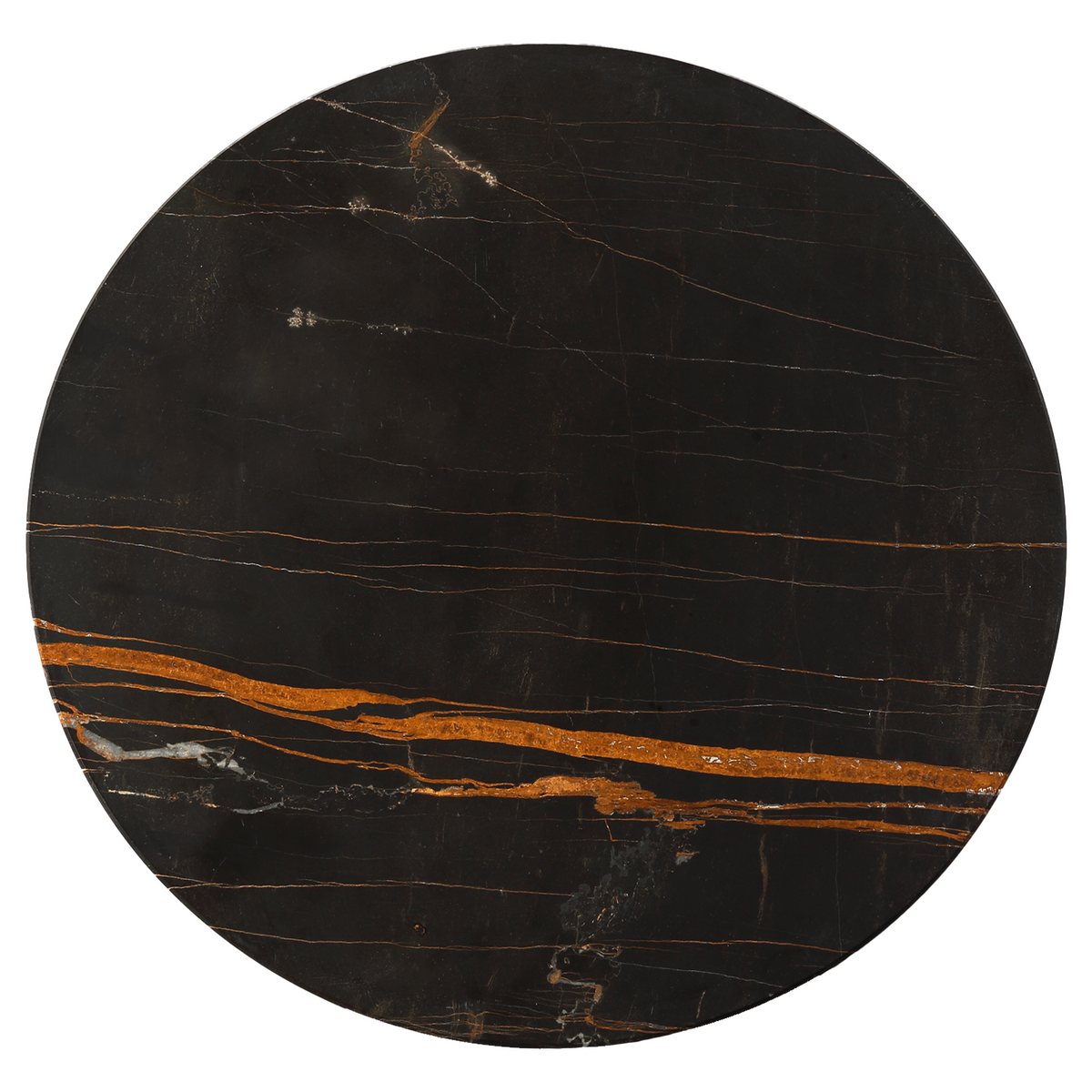
The black family is mostly granite — Zimbabwe Black, Angola Silver Black, Sesame Black, Via Lactea, Black Galaxy and Absolute Black — with black marbles (Nero Marquina, Noiraziza, Black Fossil) for the decorative pieces. Granite is one of the hardest stones we sell, which is why this collection is the working one: cutting boards, pastry boards, and mortars and pestles.
Black does two jobs. In the kitchen it hides use and looks sharp against steel and wood; as décor — bookends, incense holders, spice cellars — it anchors a shelf. One honest note: black shows dust, water spots and fingerprints sooner than mid-tones, so a quick wipe keeps it looking black.
"Black" here runs from pure Absolute Black to silver-flecked Angola Silver Black and starry Black Galaxy, and Nero Marquina's veining is white and bold. Every piece is cut from natural stone, so no two match exactly. Check the photos and dimensions on each product page before you buy.
Is black granite better than black marble for the kitchen?
Yes, for daily work. Granite is harder and shrugs off knives and grinding, which is why the cutting boards, pastry boards and mortars here are granite. Black marble (Nero Marquina, Noiraziza) is best for display pieces, where the veining shows.
Why does my black piece look dusty and show water spots?
Dark polished stone shows dried water and dust more than any other color. It is surface residue, not damage — dry the piece after washing and wipe it with a soft dry cloth.
Can I use the mortar and pestle every day?
Yes — that is what the granite ones are for. They are heavy enough to stay put while you grind. Wash with warm water and mild soap and dry right away. Keep acidic cleaners off the marble spice cellars.